Technology has transformed nearly every aspect of nonprofit operations. From donor management and fundraising to volunteer coordination and program delivery, organizations rely on a growing number of digital tools to support their mission.
However, one area often remains disconnected: finance.
When financial systems are not integrated with the rest of an organization’s operations, leadership loses valuable visibility into performance, staff spend unnecessary time on manual processes, and decision-making becomes more difficult. Bridging the gap between technology and finance allows nonprofits to operate more efficiently, improve financial clarity, and focus more time on advancing their mission.
Why Technology and Finance Must Work Together
Many nonprofits use multiple systems to manage different aspects of their organization. A customer relationship management platform may track donors; another system may manage grants; and accounting software may operate independently of both.
While each system serves an important purpose, disconnected platforms often create information silos.
This can result in:
- Duplicate data entry
- Inconsistent financial reporting
- Delayed month-end close processes
- Limited visibility into organizational performance
- Increased administrative burden
According to the National Council of Nonprofits, strong financial management depends on accurate information, effective internal controls, and systems that support informed decision-making.
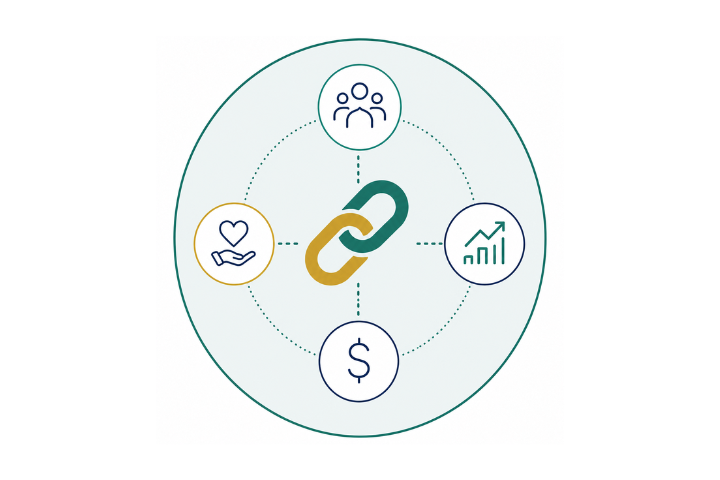
When technology and finance work together, nonprofit leaders gain a more complete understanding of how operational activities affect financial performance.
The Cost of Disconnected Systems
Many nonprofit organizations rely on manual processes to transfer information between departments and software platforms.
For example, donor contributions may need to be exported from one system and manually entered into another. Grant information may be maintained in spreadsheets separate from accounting records. Program managers may have limited access to current financial information needed to manage budgets effectively.
These disconnected processes often lead to:
- Data entry errors
- Delayed reporting
- Inconsistent information
- Increased staff workload
- Reduced confidence in financial reports
According to NTEN, nonprofits that strategically adopt technology are better positioned to improve efficiency, collaboration, and organizational effectiveness.
Technology should reduce administrative work, not create additional complexity.
Better Financial Visibility Starts With Better Integration
One of the greatest benefits of connecting technology and finance is improved visibility across the organization.
When financial information updates alongside operational activity, leadership can better understand:
- Budget performance
- Cash flow
- Grant spending
- Program costs
- Fundraising results
- Organizational trends
Instead of waiting until the end of the month for reports, leaders have access to more timely information that supports faster and more confident decision-making.
Financial visibility becomes a management tool rather than simply a reporting requirement.
Automation Improves Efficiency
Manual financial processes consume valuable staff time that could be spent supporting programs and serving constituents.
Automation can simplify many routine activities, including:
- Data synchronization between systems
- Invoice processing
- Expense tracking
- Bank reconciliations
- Financial reporting
- Budget monitoring
Automating repetitive tasks helps reduce errors while allowing finance teams to focus on analysis, planning, and strategic support.
According to TechSoup, technology investments help nonprofits improve operational efficiency while maximizing limited resources.
Breaking Down Organizational Silos
Technology integration is not only about software. It is also about improving communication between departments.
Finance should not operate independently from fundraising, development, operations, or executive leadership.
When departments share accurate information, organizations can:
- Improve planning
- Allocate resources more effectively
- Strengthen accountability
- Respond more quickly to organizational changes
According to Independent Sector, strong organizational performance depends on collaboration, transparency, and informed leadership.
Financial data becomes significantly more valuable when it supports decisions across the entire organization.
Choosing Technology That Supports Growth
As nonprofits grow, their technology should evolve alongside them.
Organizations should regularly evaluate whether their systems:
- Integrate with one another
- Reduce manual work
- Support accurate financial reporting
- Scale with organizational growth
- Provide leadership with meaningful insights
The goal is not simply to purchase more software. It is to build an ecosystem that supports better financial management and stronger operational performance.
A thoughtful technology strategy allows nonprofits to spend less time managing systems and more time delivering impact.
Technology and finance should never operate as separate functions within a nonprofit organization.
When operational systems, financial processes, and leadership reporting are connected, organizations gain greater visibility, improve efficiency, and make more informed decisions.
Bridging the gap between technology and finance helps nonprofits:
- Eliminate manual processes
- Improve financial accuracy
- Increase operational efficiency
- Strengthen decision-making
- Focus more resources on fulfilling their mission
At Mission Metrics Accounting, we help nonprofit organizations bridge the gap between technology and finance by connecting operational processes with financial management. The result is greater financial clarity, more efficient operations, and the insights leaders need to confidently execute their mission.